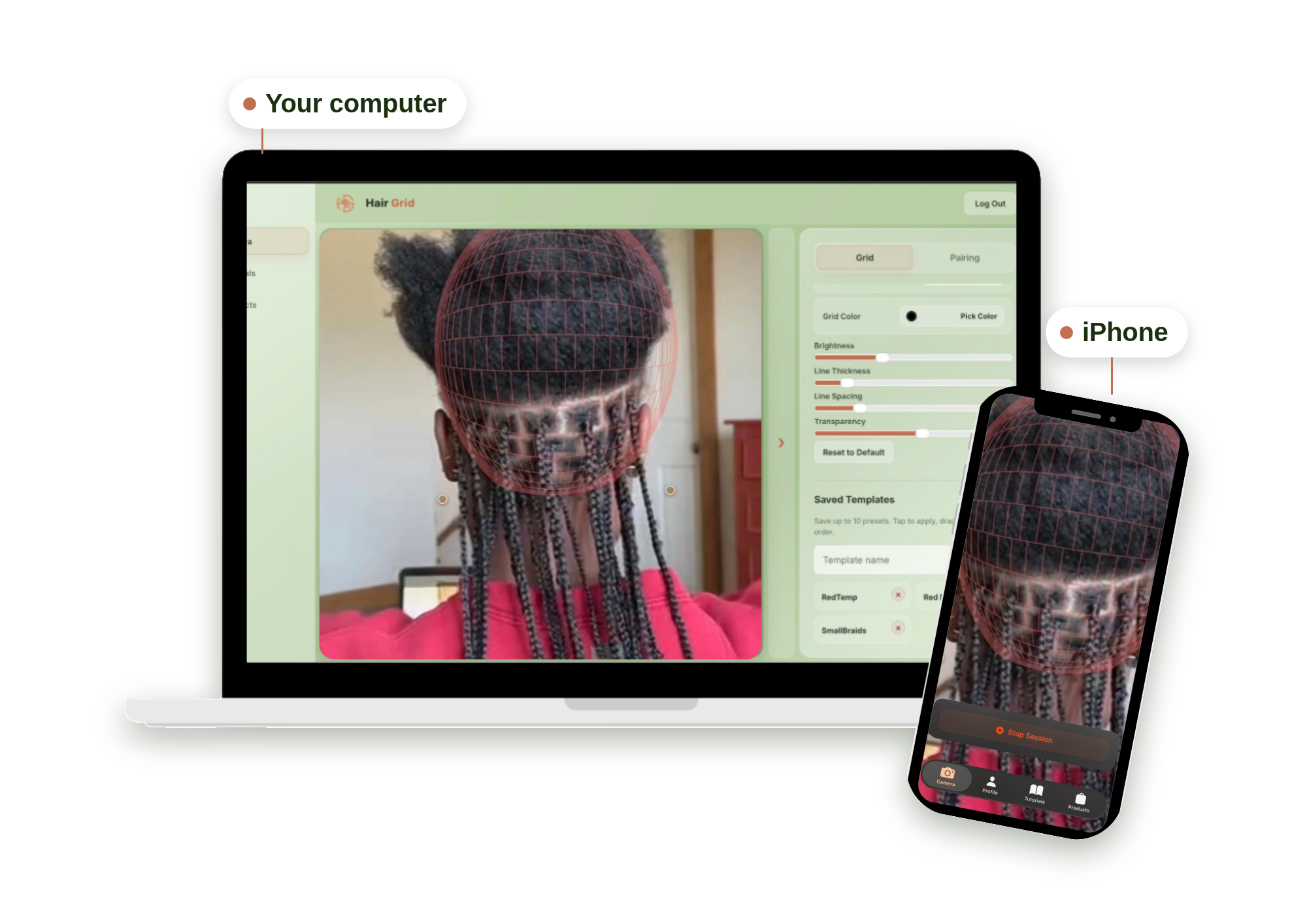
“The back of my head is my blind spot.”
Mirrors create more problems than they solve
Holding two mirrors means losing the use of both hands. You end up solving an ergonomics problem before you can even start styling.
Phone setups are unreliable
Propping your phone against a wall works until it falls. No stability, no overlay, no guidance — every session is a compromise.
Existing tech was not designed for this
Social media filters face forward and entertain. Video calls are for conversation. Nothing combines a stable rear view with a real-time styling guide.
No reference means no consistency
Without a visual grid, every parting is a fresh guess. Results vary session to session, and the one style that finally worked becomes impossible to replicate.
HairGrid™ was born out of a real need — Black women needed a reliable way to see and style the back of their head. Founder Djoulisa Allen spent years navigating the same frustration millions of women know too well. There was no purpose-built tool for the job.
The two-mirror juggle. The phone propped against a wall. The uneven parts discovered hours later. She knew there had to be a better way — not a workaround, but a precision tool designed specifically for the way Black women care for their hair. That conviction became HairGrid™ — developed with an engineering team at Boise State University and now live on the App Store.